



Cybersecurity as Added Value in Insurance
MAWDY | 23.04.2026


In a world of growing cyber risks, cybersecurity has become a major challenge for any company or business, as the consequences of these threats can be devastating.
In such an unstable environment, insurers hold a clear competitive advantage by incorporating security into their value proposition and placing the customer at the center of protection—an approach exemplified by the Mawdy model, Mapfre’s assistance unit.
As organizations continue to digitalize, cyber threats such as data kidnapping and leakage, identity theft, and IT disruptions have become top business concerns.
“It’s not surprising: today, cybercrime generates more money than drug trafficking and prostitution combined. In addition, online scams are proliferating and growing exponentially every year, surpassing crimes such as robberies and theft,” says Juan Manuel Muñoz Perales, Chief Security Officer (CSO) y Global CISO at Mawdy.
Drivers of evolution
Disruptive technologies are a major driver in this field. In the same survey, artificial intelligence appears as one of the risks with the greatest long-term projection. While AI brings clear advantages, its malicious use enables the automation of phishing campaigns and the creation of manipulated videos, images, or audio (deepfakes). Another emerging battlefield is quantum computing, which—with infinitely faster information processing speeds—could compromise current cryptographic systems that protect communications, financial transactions, and critical infrastructure.
Other external pressures include geopolitical instability and the rise of state-sponsored cyber activities, not only those driven by criminal organizations. These groups are also replicating corporate structures to carry out their illicit activities. Regulation is another key driver, especially in Europe, with the launch of new data protection regulations designed to benefit consumers. Finally, the customer perspective stands out, with increasing demands for security in products and services.
Comprehensive customer protection
In the insurance sector, cybersecurity is highly developed.
“The industry has always worked to maintain a solid level of security that balances business generation with protection. In fact, insurance must safeguard security more than other industries, as it is highly regulated—providing an additional guarantee for customers,” explains Mawdy’s Global CSO and CISO.
At Mapfre, we also have a Cyber Resilience Plan, a stable and global program that includes controls, vulnerability reviews, remediation, and all intrinsic security activities. The goal is to provide comprehensive protection to customers—meaning their inclusion within the protection framework itself, representing a significant evolution.
To protect identity and prevent data manipulation, Mapfre uses two-factor authentication for access, while also strongly promoting ongoing awareness and education.
“The weakest link in the security chain is always the human factor. In 99% of attacks, there is a human failure or error behind them—something that can be corrected through proper awareness,” emphasizes Juan Manuel Muñoz.



Security as part of the value proposition
On the product side, insurers have been developing cyber insurance for more than a decade, with significant growth driven by rising threats. According to data from The Geneva Association, the leading global insurance association of which Mapfre is a member, global cyber insurance premiums increased tenfold between 2013 and 2023—from $1.5 billion to nearly $15 billion.
Mapfre already offers cyber risk insurance, particularly aimed at organizations, with coverage such as damage to IT systems, business interruption guarantees, technological services to restore operations after attacks, protection against cyber extortion threats, and preventive services including antivirus solutions, vulnerability analysis, and data protection advisory services.
More broadly, the insurance market is now at a point where service offerings are becoming more sophisticated, and security is emerging as a true value-added component—providing individual and corporate customers with services related to digital identity protection, cyberbullying management, and antivirus tools in case of infection. The possibilities are vast.
This is where Mawdy has a strong voice, thanks to its digital nature, type of services, and management of sensitive information such as medical data.
“At our company, we are committed to incorporating our differentiated approach to security into the value proposition,” stresses Juan Manuel, who also calls for greater involvement of security leaders in business development and commercial proposals.
Certifications: a guarantee of trust
At Mawdy, and across the Mapfre Group, we hold numerous security standards and certifications that support our operations and provide an additional guarantee of trust for customers. We have also taken the step of having third-party companies assess our security level—another competitive advantage.
Although the cybersecurity strategy is global, Mawdy’s global teams allow us to stay close to specific attacks and regulations in different markets. Moreover, no new project is launched without first passing Security and Privacy by Design.
Looking ahead, external pressure will not slow down. Cyber threats will become increasingly sophisticated, making continued investment and progress essential. Another key issue is cyber resilience—the ability to restore operations and return to normal after an attack or disruption, as highlighted by the AWS cloud outage in October last year in the North Virginia (United States) region. “Fortunately, at Mawdy we had resilience mechanisms in place that allowed us to continue operations—in some cases within minutes, and in others in less than four hours.”
In short, the current trend in cybersecurity and cyber resilience is evolving from a traditional model focused on internal support to a new one where security becomes a value provider within the business proposition—leveraging the competitive advantage of comprehensive customer protection.
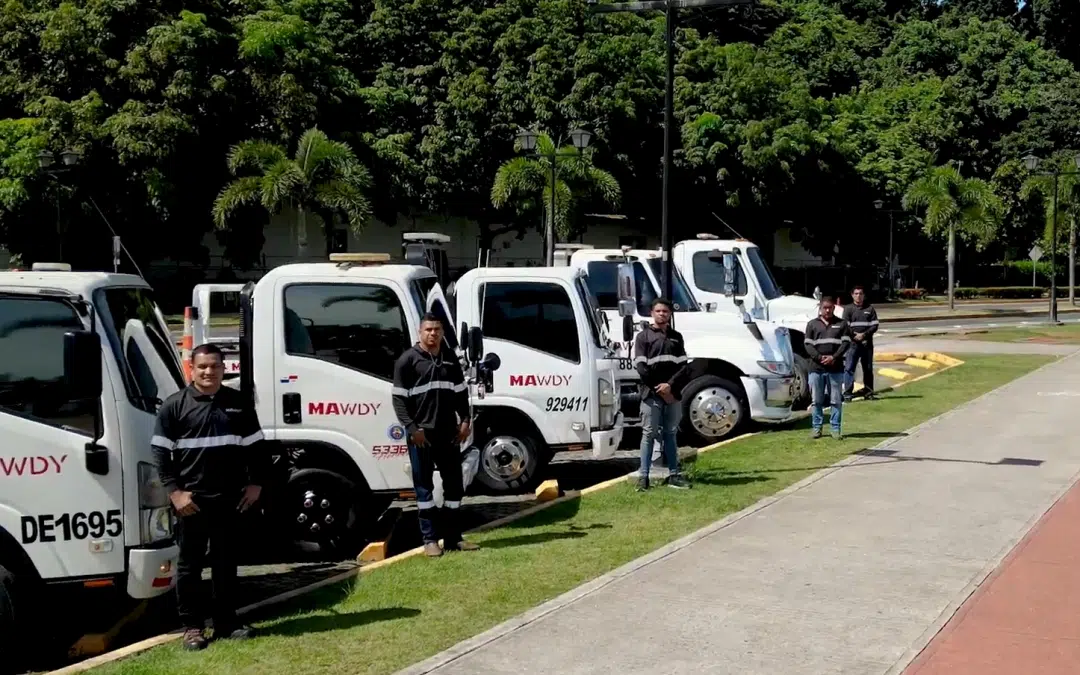

The network that supports each assistance case
Behind every assistance, there is a network of people who make the impossible possible. This is how Mawdy’s provider ecosystem works.
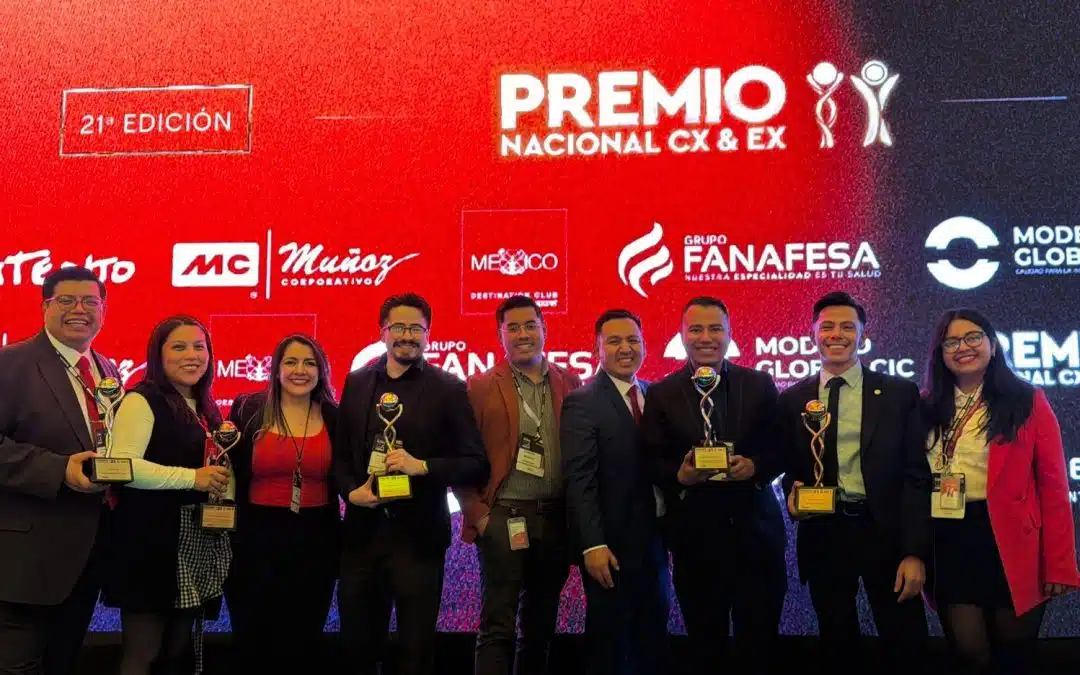

When experience is built with purpose, impact transcends.
In an environment where customer experience has become a true differentiating factor, Mawdy Mexico has been recognized with five awards at the Global CX Forum 2026.