The network that supports each
   assistance case

MAWDY | 05.05.2026

When a customer requests help, they expect a quick, efficient, and frictionless response. What is not seen—and what we rarely consider—is everything that happens to make that experience possible. What is behind that process?

Before a vehicle is towed, before a doctor attends to a patient, or before an incident at the destination is managed, there is already a gear in motion. A network formed by people, decisions, trust, and experience. A network that, as explains Verónica Montengro, Head of Providers at Mawdy Ecuador, “is facing the customer and, in that moment, represents us.”

The origin of each response

That ecosystem of collaborators is the heart of assistance at Mawdy. Through them, we make every intervention possible.

Our model is based on a simple but demanding idea: being where the customer needs us. To achieve this, it’s essential to have a solid, seamless structure that is capable of adapting to any situation.

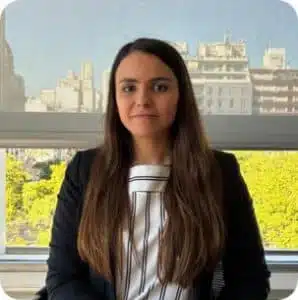
It’s not just about managing providers, but about building alliances. Having the right collaborators in each place, who is prepared to act under service standards, is only part of it. The other, equally important part, is the relationship we maintain with these collaborators.As Micaella summarizes: “it has to be a win-win.”


 Micaella Greganti

     Mawdy Uruguay

Results that make the difference


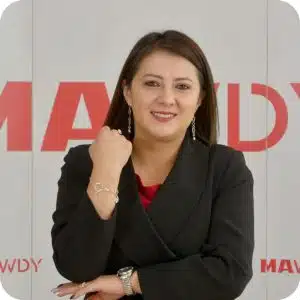
Verónica Montenegro

Mawdy Ecuador

Each case resolved is the result of a continuous management, monitoring, and support. The relationships with providers evolve towards a long-term collaboration based on trust.

The objective is to forge a commitment. When that relationship is strengthened, the impact is direct: greater agility, better responsiveness, and a clear priority on service delivery.

Behind every provider there are people, contexts, and different realities. That is why loyalty is built day by day. “It’s the entire way we interact with them and the care we provide, including to their families,” shares Verónica.

Technology that drives, people who transform

In recent years, digital transformation has changed the way assistance is managed. Smart allocation platforms, tracking systems, and monitoring tools enable more agile and transparent management. These solutions do not replace human intervention, they enhance it. They make it possible to anticipate, optimize times, and reduce uncertainty, freeing the teams to focus on the customer.

However, this evolution is not homogeneous throughout the network. As Paola recalls: “there are those who adopt technology quickly and others who need more support.” That is why this process is always accompanied by training, digital content, and practical resources that facilitate adaptation. Because incorporating tools is not enough; it’s essential to integrate them into the way of working.

As highlighted by Flor: “technology should enable; experience—the human factor—defines quality.”

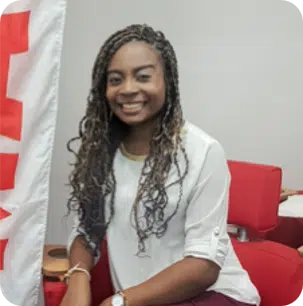
And this is what makes the difference. Beyond systems, each assistance case remains an interaction between people. The way we address the customer, empathy in a moment of tension, and attention to small details remain decisive. “It’s those details that truly transform an incident,” points out Dainadie.

Paola Ardón

Mawdy Honduras

Flor de María Pérez

Mawdy Nicaragua

Dainadie Zamor

Mawdy Venezuela

The network in critical moments

The strength of this operating model is tested when the context becomes more challenging. Situations such as the pandemic, supply chain crises, or complex operational environments have required a strong capacity for adaptation and collaboration.

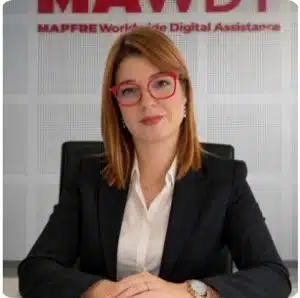
“I learned very early on that, in critical moments, the people around us are the most important,” emphasizes Rabeb.

When the context becomes complex, the network responds, proposes, adapts, and endures. “The provider has always been there, even proposing solutions,” notes Dainadie.

This response capacity is not improvised. It’s the result of sustained work over time.


Rabeb Romdhane

Mawdy Tunisia

Leadership that transforms

This network is also built around leadership. Leadership based on proximity, judgment, and the ability to make decisions in complex environments. In a historically male-dominated sector, many of the leaders within this structure are driving an evolution—not only in management, but also in workplace culture.

“At first, they size you up,” recalls Micaella. But knowledge opens doors. And, as Flor adds, “common sense is what allows you to stay on course day by day.”

That change also extends to the operational level. In Uruguay, a female crane operator is part of the team. A concrete example of how the transformation is already tangible.

A global team that acts as one

Mawdy’s assistance is coordinated through 23 units in different countries, integrating very diverse realities under a single way of working and with the ability to provide service wherever the customer needs us, regardless of where they are in the world.

We are a network that shares standards and a common vision of assistance. Each provider, each coordinator, and each tool is part of a connected system that operates in an integrated way, making a consistent response possible in all types of contexts.

It is a way of working that is also felt from within. As Rabeb describes it, “with roots in solid beginnings, I am now part of a global network that moves forward together.”

And that is precisely where our strength lies. In everything that isn’t visible, but makes every assistance work. In a network that operates in a coordinated, consistent, and discreet way to be there—anywhere—when it matters most.


Artículos